
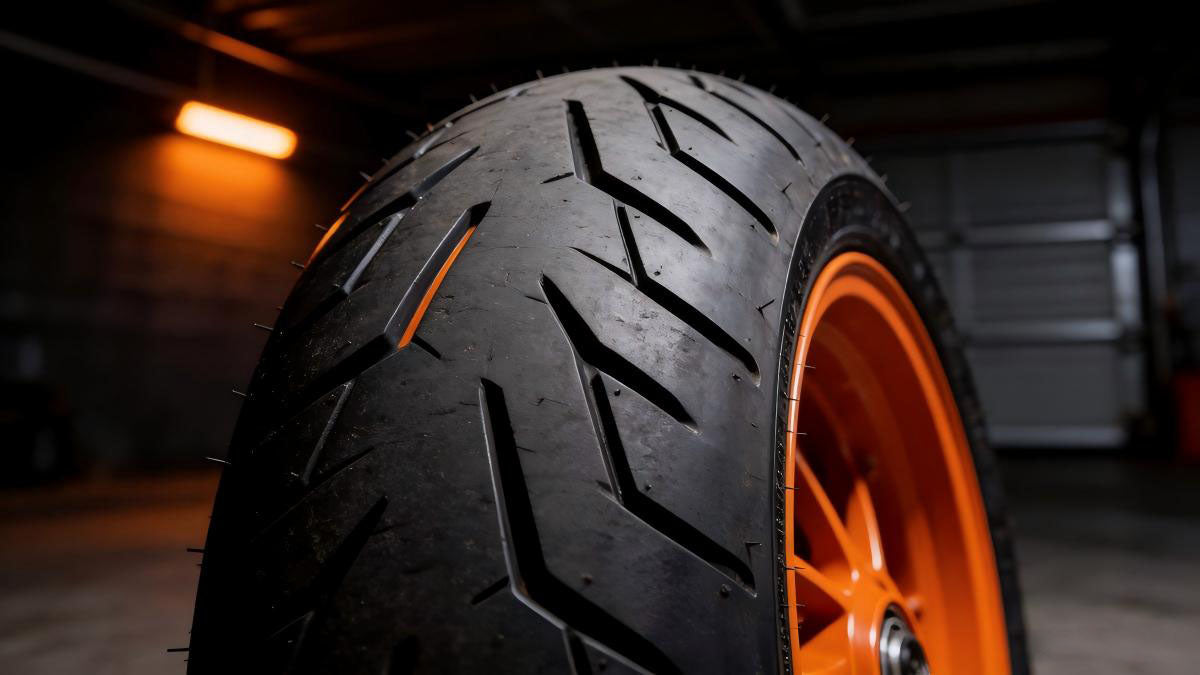
Your tires are the only contact between your motorcycle and the road — two patches of rubber, each barely the size of a credit card, carry your speed, braking, and cornering. Nothing affects your bike's grip, handling, and safety more than tires, so knowing when to replace them and how to choose the right set is essential. This motorcycle tire guide covers the signs that say it is time for new rubber and the factors that go into choosing the best tire for your riding.
Why Tires Matter So Much
Every input — throttle, brake, steering — is translated to the road through the tire's contact patch. Worn, old, or wrong-type tires reduce grip, lengthen braking distances, and make the bike handle unpredictably. A great motorcycle on bad tires is dangerous; an average motorcycle on good tires is confident and capable. Tires also age and degrade even when not ridden, so time is as important as mileage in deciding when to replace them.
When to Replace Motorcycle Tires
Replace your tires when any of these conditions apply. When in doubt, replace — tires are not the place to stretch a few extra miles.
Tread Depth
Tread disperses water to prevent hydroplaning, so adequate depth is critical in the wet. The legal minimum tread depth in most regions is around 1–2 mm (about 1/32 inch), but for safety you should replace well before reaching the minimum. Most tires have tread wear indicators (TWI) — small raised bars in the grooves. When the tread is worn down level with these bars, the tire is at its limit. As a rule, replace front tires at around 2 mm and rears around 2–3 mm of remaining tread, sooner if you ride in the wet. A worn rear also squares off, flattening the profile and making the bike turn in reluctantly.
Tire Age
Rubber degrades over time, hardening and losing grip even with tread remaining. The industry consensus is to replace motorcycle tires every five to six years from the date of manufacture, regardless of tread. Find the manufacture date in the DOT code on the sidewall: the last four digits give the week and year (e.g., "2319" means the 23rd week of 2019). A tire older than six years, even if it looks new, is due for replacement because aged rubber offers far less grip, especially in the wet.
Damage and Defects
Inspect tires regularly for cuts, cracks, bulges, embedded objects, and punctures. Sidewall cracks or bulges mean the tire's structure is compromised — replace immediately. A puncture in the center of the tread may be repairable by a professional plug-patch, but punctures in the sidewall or larger than about 6 mm (¼ inch) mean replacement. Never ride on a plugged tire at high speed for long; treat it as a temporary fix.
Uneven Wear and Cupping
Cupping (scalloped wear) or flat spots indicate suspension, alignment, or inflation problems and degrade handling. Severe cupping is reason to replace the tire and fix the underlying cause. If the tire is worn unevenly to the cords anywhere, replace it at once.
How to Choose Motorcycle Tires
When it is time for new tires, choose based on your bike, your riding style, and the conditions. The wrong tire can make a good bike handle poorly.
Match the Size and Type
Your owner's manual specifies the correct tire sizes, load ratings, and speed ratings. Use the exact size — a different size changes gearing, handling, and clearance. The size is printed on the sidewall (e.g., 120/70 ZR17). Match the speed rating at minimum, and the load rating to your bike's weight.
Tire Types by Riding Style
- Sport / street tires: Soft compounds for grip and sharp handling on paved roads. Best for sport bikes and aggressive street riding; wear faster.
- Touring tires: Harder compounds and harder-wearing for long mileage and stability. Best for touring and commuting; less outright grip.
- Sport-touring tires: A compromise of grip and longevity, ideal for riders who do a mix.
- Cruiser tires: Designed for the weight and straight-line stability of cruisers, with patterns that resist cupping.
- Dual-sport / adventure tires: Treaded for both road and light off-road use; the balance of street vs dirt grip varies by model.
- Off-road / motocross tires: Knobby tread for dirt, not suited to road use.
Choose the type that matches where and how you actually ride. A pure sport tire on a touring bike wastes money and wears out fast; a touring tire on a sport bike driven hard will not grip when you need it.
Compound Considerations
Softer compounds grip better but wear faster and are more sensitive to temperature. Harder compounds last longer but offer less grip, especially cold. Multi-compound tires use a harder center for straight-line mileage and softer shoulders for cornering grip — a great all-round choice for street riders. For most street riders, a quality sport-touring tire offers the best balance.
Tube vs Tubeless
Confirm whether your wheels require tube-type or tubeless tires. Spoked wheels usually need tubes; cast wheels are usually tubeless. Mixing them up is dangerous. If you have tube-type wheels, you also replace the tube when you replace the tire.
Wet-Weather Performance
If you ride in the rain, prioritize tread pattern and compound for wet grip. Look for tires with proven wet-weather design and replace them before the tread gets too shallow — wet grip falls off sharply as tread wears.
Tire Maintenance for Longer Life
- Check pressure regularly — weekly or before long rides, cold. Wrong pressure is the top cause of premature wear and poor handling.
- Inspect for damage at every cleaning.
- Avoid overload and aggressive riding that overheats and wears tires.
- Replace in pairs when possible. Mixing a new tire with a worn one changes handling and grip balance, especially on the front.
Final Thoughts
Your tires are your lifeline to the road, so treat them as the critical safety component they are. Replace them when the tread is low, when they are more than five to six years old by the DOT date, or when you spot damage — and never ride on compromised rubber. When choosing, match the size and type to your bike and your real riding, and pick a compound that balances grip and longevity for your needs. Pair fresh, correct tires with a regular maintenance schedule and well-kept brakes, and your motorcycle will grip, stop, and handle exactly as it should, mile after mile.
Share: