
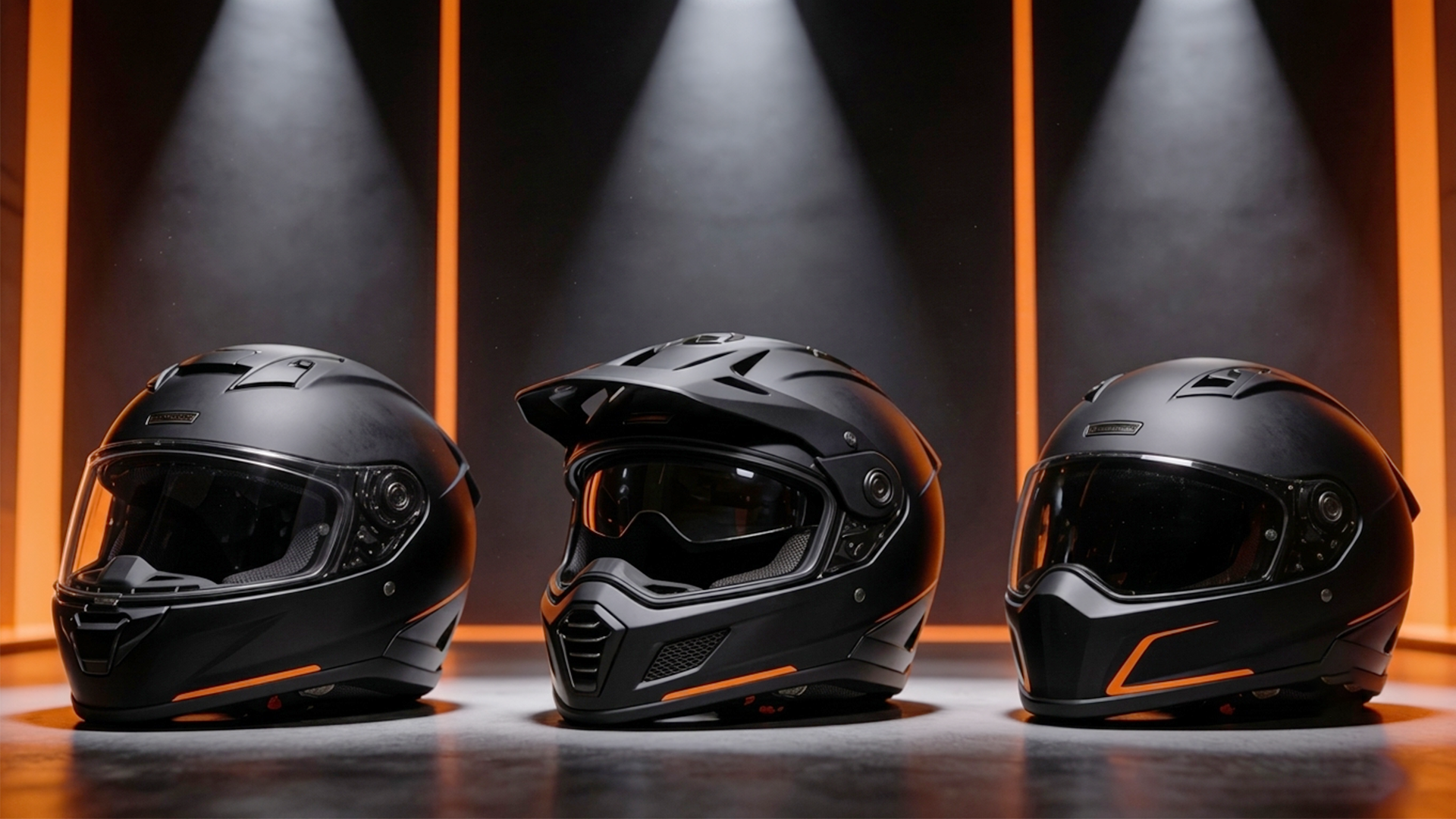
Choosing between full face vs modular vs half helmets is one of the first decisions every rider faces, and it is a trade-off between protection, convenience, and comfort. Each helmet type has a loyal following because each suits a different style of riding. The right choice depends less on what looks cool and more on how, where, and how fast you ride.
This guide compares the three most popular helmet types so you can pick the one that fits your needs — without compromising the safety you actually need.
Why Helmet Type Matters
Every helmet that carries a recognized certification offers a baseline of impact protection, but the type determines how much of your head and face are covered, how quiet and weatherproof the helmet is, and how convenient it is day to day. The chin and face are among the most common impact zones in a crash, so a helmet that leaves them exposed is a conscious trade-off. Understanding the strengths and limits of each type lets you make that trade-off with open eyes.
 Full-Face Helmets: Maximum Protection
A full-face helmet encloses the entire head and face with a fixed chin bar and a face shield. It is the type most safety experts recommend for the widest range of riders.
Advantages
· Best impact protection: The fixed chin bar protects the most frequently impacted area of the head in a crash. Studies of crash data consistently show the chin and jaw bear a large share of impacts.
· Best weather and wind sealing: A full-face helmet blocks wind, rain, cold, and flying debris, making it the most comfortable option in poor weather and at highway speeds.
· Quietest ride: The enclosed design and good aerodynamics mean less wind noise, which reduces fatigue on long rides.
· Eye protection built in: The face shield keeps dust, insects, and stones off your face without needing goggles.
Drawbacks
· Less convenient: You must remove the helmet to talk, drink, eat, or show your face at a fuel stop.
· Warmer in hot weather: Airflow is limited compared to open styles, though good ventilation helps.
· Can feel claustrophobic to riders used to open designs.
Best For
Sport riders, touring riders, commuters, and anyone riding at highway speeds or in varied weather. If you want one helmet that does everything safely, this is it.

Modular (Flip-Up) Helmets: The Convenience Compromise
A modular helmet is a full-face helmet whose chin bar pivots up out of the way. With the chin bar down and locked, it functions like a full-face; flip it up, and you can talk, drink, or fill up without removing the helmet.
Advantages
· Convenience: Flip up the chin bar at stops for conversation, fuel, hydration, or to show your face. Great for touring and commuting.
· Easier to put on and take off with glasses, since you can flip the front up.
· Versatile feel: Open at stops, enclosed on the move.
Drawbacks
· Slightly lower impact protection: The hinge mechanism is a structural compromise. Most modular helmets are certified only when the chin bar is locked down, and even then, they are generally a touch less impact-resistant than a true full-face.
· Heavier: The hinge hardware adds weight, which can increase neck fatigue.
· Noisier and less weatherproof: The moving joints let in more wind and water than a fixed shell.
Best For
Touring riders, commuters, and riders who value convenience and frequently stop, especially older riders or those who wear glasses. Always ride with the chin bar locked down.

Half Helmets: Freedom With the Least Protection
A half helmet (sometimes called a "shorty") covers only the top of the head, leaving the face, chin, ears, and the base of the skull exposed. They are the lightest and most open option, popular with cruiser riders.
Advantages
· Lightest and most open: Minimal weight and maximum airflow give a free, unencumbered feel.
· Best visibility and hearing: With no face shield or chin bar, your peripheral vision and hearing are unrestricted.
· Easy on and off and simple to carry.
Drawbacks
· Least protection: The face, chin, and lower skull — high-impact zones — are completely exposed.
· No face or eye protection: You need separate goggles or glasses, which can be uncomfortable.
· Noisiest: Wind buffets the ears directly, and there is no shield to block weather or debris.
· Least weatherproof: Cold, rain, and wind hit you directly.
Best For
Slow-speed, fair-weather cruising on quiet roads, where the open feel matters more than maximum protection. From a pure safety standpoint, a half helmet is the least recommended option, and many riders who start with one eventually move to a fuller style.
Quick Comparison

How to Decide
Ask yourself three questions:
1. How fast and far do you ride? Highway speeds and long distances favor full-face or modular helmets for protection, weather sealing, and noise.
2. How often do you stop? Frequent stops for fuel, food, or conversation make a modular helmet's flip-up convenience genuinely valuable.
3. What is your weather? Rain, cold, and wind make a full-face helmet far more comfortable; a half helmet is fine only on warm, calm days.
If you can only own one helmet, a full-face is the safest, most versatile choice for the widest range of conditions. If you tour or commute and crave convenience, a modular with the chin bar always locked down is a great second. Reserve half helmets for relaxed, fair-weather cruising.
Fit Still Rules
No matter which type you choose, fit and certification matter more than the type. A perfectly fitted, certified half helmet is safer than a loose, uncertified full-face. Always check for a DOT, ECE, or Snell certification and follow the fit steps in our How to Measure & Fit a Motorcycle Helmet: A Beginner’s Complete Guide: snug all around, no pressure points, and it must not roll off the back of your head.
Final Thoughts
The full face vs modular vs half helmet decision is a balance of protection, convenience, and comfort. Full-face helmets offer the best all-round safety and weather protection for most riders; modular helmets add convenience for touring and commuting with a small safety trade-off; half helmets prioritize freedom over protection and suit only low-speed, fair-weather riding. Match the helmet to your real riding, prioritize certification and fit, and you will end up with head protection you can trust. Explore our Oumurs 361S ECE/DOT dual certified street helmet series and ride with confidence that your head is properly covered.
The full face vs modular vs half helmet decision is a balance of protection, convenience, and comfort. Full-face helmets offer the best all-round safety and weather protection for most riders; modular helmets add convenience for touring and commuting with a small safety trade-off; half helmets prioritize freedom over protection and suit only low-speed, fair-weather riding. Match the helmet to your real riding, prioritize certification and fit, and you will end up with head protection you can trust.
Shop the Oumurs 361S — ECE 22.06 & DOT Certified Full-Face Street Helmet
Designed for long-oval head shapes, dual-certified, and built for street riding. Available in three colorways:
Shop Full-Face Helmets →
Share: