
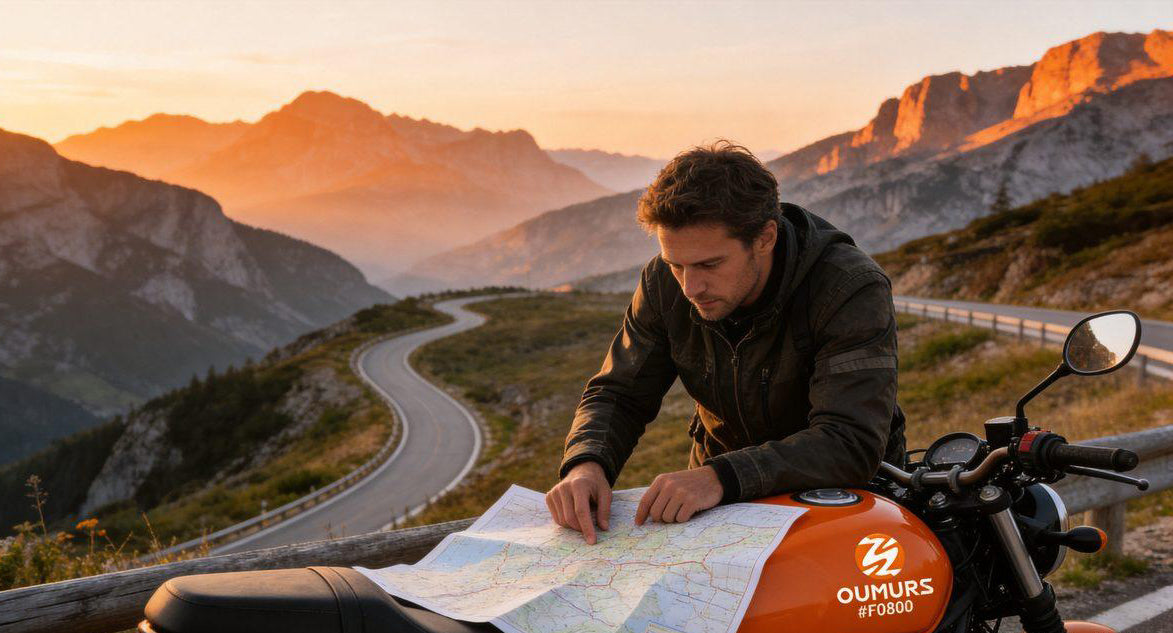
A motorcycle road trip is an adventure that stays with you for life — but the difference between an epic trip and a miserable one is almost always in the planning. Spontaneity has its place, but on a motorcycle, where weather, range, fatigue, and mechanical reliability all matter more than in a car, a little preparation goes a very long way. This guide shows you how to plan a motorcycle road trip from the first spark of an idea to a smooth, unforgettable ride.
Step 1: Choose Your Destination and Theme
Start with the why. Are you chasing twisty mountain roads, a coastal cruise, a national-park tour, or a cross-country challenge? The theme of your trip shapes everything else — the route, the daily mileage, the gear, and the season. A twisty-road trip demands different planning than a long-distance highway crossing. Pick a destination or a loop that excites you, then build the trip around the kind of riding you most enjoy.
Step 2: Plan the Route — Roads, Not Just Distance
The biggest planning mistake is treating a motorcycle trip like a car trip, optimizing for the fastest route. On a motorcycle, the journey is the point, so choose roads, not just destinations.
- Prefer secondary roads over interstates. Two-lane highways are more scenic, more engaging, and less fatiguing than slabbing it on the freeway.
- Use motorcycle-friendly route planners and maps that highlight scenic and twisty roads.
- Plan a daily mileage you can actually enjoy. A common mistake is planning too many miles per day. For most riders, 200–300 miles (320–480 km) a day allows time for stops, scenery, and rest; aggressive riders may do more, but fatigue ruins trips. Build in buffer days for weather, breakdowns, or a road you want to linger on.
- Identify fuel stops. Know your bike's range and plan fuel stops before the tank runs low, especially in remote areas where stations are scarce.
- Have alternatives. Weather, road closures, and detours happen. Mark a couple of alternate routes so a closed road does not end the trip.
Step 3: Time the Season and Check the Weather
The right season makes or breaks a trip. Research the climate along your route for the dates you plan to ride. Mountain passes close with snow from autumn to spring; desert regions are unbearable in midsummer; coastal roads can fog in for weeks. Choose a window that offers the best combination of open roads, comfortable temperatures, and reasonable chance of dry weather.
Monitor the forecast in the days before and during the trip, and be willing to adjust. Packing for variable weather — see our [road trip packing list](https://www.oumurs.com) — keeps you comfortable when conditions change, as they will. Always carry rain gear, even on a trip forecast to be dry.
Step 4: Plan Lodging and Camping
Decide where you will sleep each night and book ahead in popular areas or peak season:
- Motels and hotels offer comfort, hot showers, and secure parking — ideal for rest and recovery on longer trips.
- Camping is cheaper and puts you closer to the ride, but adds gear and fatigue. If camping, pack light and compact; see our [packing list](https://www.oumurs.com) for the essentials.
- Mix both — camp a few nights, motel a few — to balance budget and recovery.
- Have a backup for nights when you cannot reach your planned stop. Knowing there is a town with lodging within range removes the pressure of a strict schedule.
Step 5: Prepare the Motorcycle
A road trip is the wrong time to discover a problem. Give your bike a thorough service well before departure so you have time to address anything:
- Fresh oil and filter if it is near the service interval.
- Tires with plenty of tread for the whole trip — replace if they will not last. Check pressure.
- Chain adjusted, lubricated, and within service limits; sprockets in good shape.
- Brake padswith adequate material; brake fluid fresh.
- Battery healthy and charging system working.
- All fasteners torqued, cables lubricated, and lights functioning.
- Carry a basic tool kit, tire repair kit, and chain lube for the road. See our full maintenance schedule for the checklist.
If your bike has known quirks, address them before you leave, not on the trip.
Step 6: Pack Smart
Pack for the conditions, prioritize balance and access, and resist over-packing — you can buy most things en route. Heaviest items low and central, rain gear and essentials accessible, weight distributed evenly. See our [motorcycle road trip packing list](https://www.oumurs.com) for the complete breakdown.
Step 7: Plan a Daily Routine
A simple routine keeps a multi-day trip smooth and safe:
- Morning: check the bike (tires, chain, oil, lights), check the weather and route, fuel up, and ride.
- Ride in segments of about an hour to 90 minutes, with short breaks to stretch, hydrate, and rest your eyes. Fatigue is the silent trip-killer.
- Eat light and hydrate often. Heavy meals make you drowsy; dehydration ruins concentration.
- Stop for fuel before you are desperate, especially in remote areas.
- Arrive at your destination with daylight to spare so you are not riding tired in the dark looking for lodging.
Step 8: Safety and Communication
- Share your itinerary with someone at home and check in daily.
- Carry a charged phone, a power bank, and offline maps in case you lose signal.
- Have emergency contacts and insurance information accessible.
- Consider a helmet intercom for navigation and music, but keep your focus on the road.
- If riding in a group, review our tips on [solo vs group riding](https://www.oumurs.com) and agree on formation, pace, and signals before you start.
Step 9: Budget for the Trip
Estimate costs for fuel, lodging, food, and a contingency for repairs or unexpected stops. Fuel is easy to estimate from your bike's mileage and the trip distance. Build in a buffer for the inevitable surprise — a mechanical issue, a longer route, or an irresistible detour. A little financial cushion turns a problem into an adventure rather than a crisis.
Step 10: Ride Flexibly
The best-laid plans are a framework, not a prison. The magic of a road trip is in the unexpected — the road you did not plan to take, the town you did not know existed, the view that made you stop. Plan thoroughly so you are free to deviate when something better appears, and be willing to adjust for weather, fatigue, and serendipity. The riders with the best stories are the ones who left room for the unplanned.
Final Thoughts
Knowing how to plan a motorcycle road trip turns a dream into a ride you will remember forever. Choose a route built around the roads you love, plan a daily mileage you can enjoy, time the season, book lodging with backups, service the bike thoroughly, pack smart and balanced, and follow a daily routine that fights fatigue. Then ride flexibly, because the best moments are often the ones you did not plan. Start with our packing list, check your maintenance schedule, and your next great ride is ready to begin.
Share: