
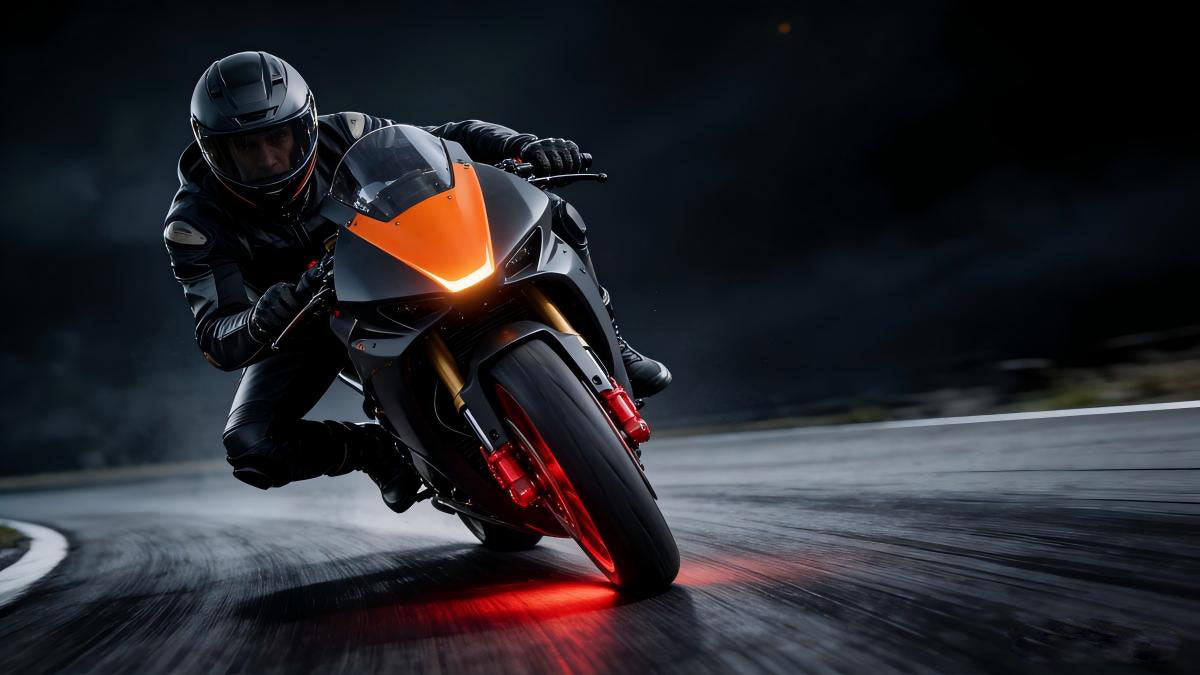
Braking is the most important survival skill on a motorcycle. You can ride for years without needing to swerve, but every single ride involves stopping — and sooner or later, you will need to stop in a hurry. Good motorcycle braking techniques give you the ability to shed speed smoothly in traffic and to halt in an emergency without losing control.
This guide covers how your brakes work, everyday braking, emergency stopping, and the nuances of braking in corners. Master these, and you add a critical margin of safety to every ride.
How Motorcycle Brakes Work
Most modern motorcycles have two separate brake systems. The front brake is controlled by the right hand lever, and the rear brake by the right foot pedal. Some bikes also link the systems (combined braking) or add ABS.
The front brake provides roughly 70 percent of your stopping power, and under hard braking even more. This is because braking shifts weight forward, loading the front tire and unloading the rear. The rear brake, by contrast, contributes less outright stopping force but is invaluable for stability, slow-speed control, and settling the chassis in corners.
Anti-lock braking systems (ABS) prevent wheel lock by rapidly modulating brake pressure. ABS is a lifesaver on slippery surfaces, but it does not shorten stopping distance on dry, clean tarmac — a skilled rider can match or beat it. The real value of ABS is that it lets you brake hard without the catastrophic consequences of a locked wheel.
The Fundamentals of Smooth Braking
Smoothness is everything. A rider who grabs the brake shocks the suspension, overloads the front tire, and risks a lockup. A rider who squeezes progressively lets the suspension compress gently and keeps the tire gripping.
The technique for everyday braking:
- Roll off the throttle smoothly and close it completely.
- Squeeze the front brake lever with a progressive, building pressure. Think of it as loading the front tire first, then increasing force as weight transfers forward.
- Apply the rear brake with light, steady pressure. The rear will lighten as weight transfers forward, so it locks easily — keep the pressure modest.
- Pull in the clutch just before you come to a complete stop to avoid stalling.
Practice this every time you stop. The goal is to stop without the suspension bouncing and without the bike lurching. A passenger should not be able to tell exactly when you stopped.
Emergency Braking: Stop in the Shortest Distance
When a car pulls out in front of you, you need maximum stopping power right now. Emergency braking is the skill that saves lives, and it should be practiced regularly in a safe location.
- Close the throttle and squeeze the front brake hard but progressively. The key word is progressive — you cannot simply grab a handful. Build the pressure over the first fraction of a second so the front tire loads up before you demand maximum grip.
- Apply the rear brake firmly but be ready to ease off. Under hard braking the rear wheel will lighten and may lift or lock. If it locks, keep it locked and straight; releasing a locked rear wheel while leaned can cause a highside.
- Keep the bike straight and your eyes up. Look at your escape path, not the obstacle. You go where you look.
- Squeeze the clutch to prevent stalling as speed drops.
- If you have ABS, squeeze hard and do not pulse the lever. Let the system do its job. Modulating the pressure yourself defeats the ABS.
The biggest mistake in emergencies is target fixation — staring at the thing you are about to hit. Force your eyes to the gap, the open lane, the escape route, and your hands will steer you there as you brake.
Trail Braking: Braking Into the Corner
Trail braking is the practice of carrying a small amount of front brake pressure past the corner entry, gradually releasing it as you add lean angle. It keeps the front tire loaded and the steering sharp, which is why it is the standard technique on track and a useful tool on the street.
The critical rule: never add brake while adding lean angle. You either brake and reduce lean, or release brake and add lean. Combining the two overloads the front tire. As you tip into the corner, trail off the brake smoothly until you are off it entirely by the apex, then roll on the throttle.
Trail braking is an advanced skill. If you are new to it, practice in a controlled environment and build up gradually. Used well, it gives you more front grip and a later, safer turn-in point.
Braking in Corners: What to Do When You Must Slow
The ideal is to set your speed before the corner and maintain or increase throttle through it. But sometimes a corner tightens or debris appears and you need to shed speed while leaned. The rule: brake gently and progressively, preferably with the rear, and only add the front if you have enough lean-angle margin.
If you must brake hard in a corner, the safest sequence is to first reduce lean angle (stand the bike up slightly), then apply the brakes firmly, then re-establish your line. This is counterintuitive — your instinct is to brake while leaned — but standing the bike up first maximizes tire grip for braking. This maneuver is one reason trail braking is so valuable: it gives you the option to brake a little harder if the corner tightens.
Braking on Different Surfaces
Grip changes everything. On wet or gravel-strewn roads, the front tire locks with far less provocation. Use more rear brake, be gentler on the front, and if you have ABS, trust it. On downhill sections, engine braking helps but the front brake still does most of the work — squeeze progressively and avoid riding the brakes, which overheats them and causes fade.
Practice Makes Permanent
Find an empty parking lot and mark a braking point. Approach at a steady speed — say 30 mph (50 km/h) — and practice stopping as short as possible without locking a wheel. Do it ten times, then ten more. Vary the speed. Add a slight swerve at the end to simulate avoiding an obstacle. This drill builds the muscle memory you need when a real emergency arrives, because in that moment you will not think — you will react with whatever you have practiced.
Common Braking Mistakes
- Grabbing the front brake. Always squeeze progressively.
- Ignoring the rear brake. It stabilizes the bike and helps in slow-speed and emergency situations.
- Staring at the obstacle. Look at your escape path.
- Pulsing ABS. Squeeze and hold; let the system modulate.
- Braking while adding lean. Release brake as you lean, or stand up before braking hard.
Gear Up Before You Ride
Good braking technique is only half the equation — the other half is wearing the right gear. The Oumurs 361S is a dual ECE 22.06 & DOT certified full-face street helmet built to protect you when it matters most. Also make sure you know how to fit your helmet correctly and choose the right helmet type for your riding style.
Shop the Oumurs 361S →Final Thoughts
Braking is the skill you hope to never need but must perfect. Squeeze progressively, use both brakes, look at your escape path, and practice emergency stops until they are instinct. Keep your brakes in top condition — worn brake pads and old fluid lengthen your stopping distance without warning. Check your pads regularly and replace them as part of a sensible motorcycle maintenance schedule so that when you need every meter of stopping power, the bike is ready to give it.
Share: