
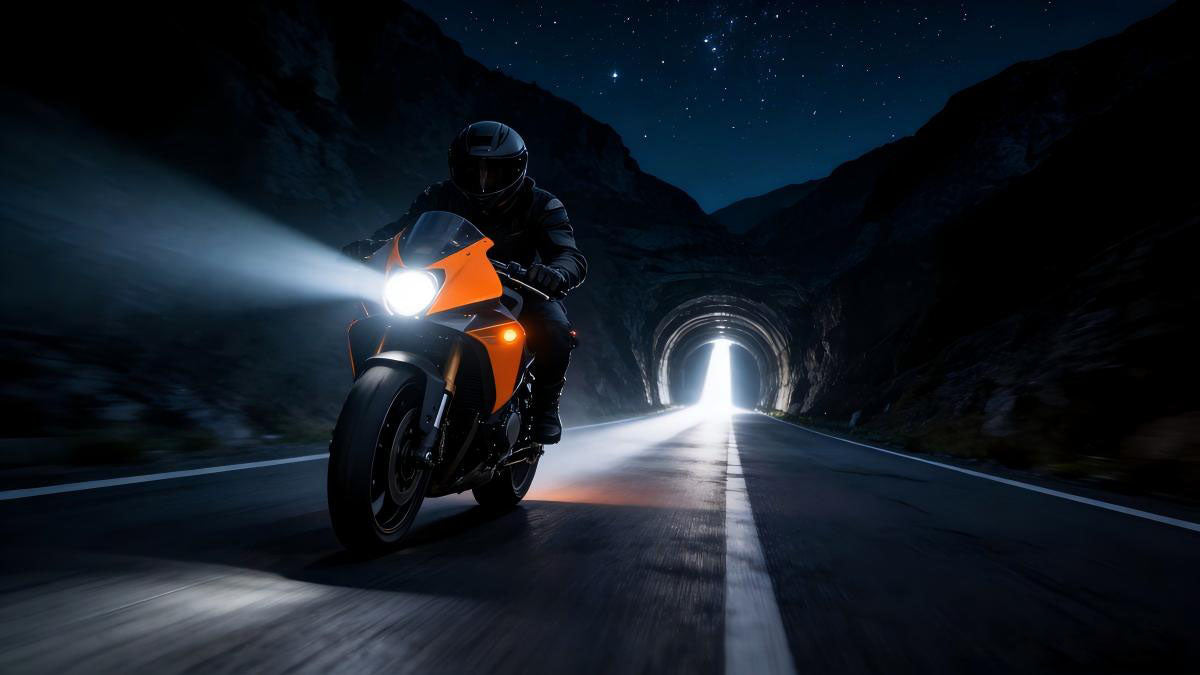
Riding a motorcycle at night is a different world. The air is cooler, the roads are quieter, and the darkness turns familiar routes into something mysterious and free. But night riding also sharpens every risk: your vision shrinks, hazards hide in the shadows, and you become far harder for other drivers to see. With the right preparation and technique, you can enjoy the unique thrill of riding after dark while keeping the dangers firmly in check.
These tips cover gear, visibility, technique, and mindset for safe motorcycle night riding.
Why Night Riding Is More Dangerous
The core challenge is simple: you see less, and you are seen less. Human eyes are poor at judging speed and distance in low light, and a motorcycle’s single headlight gives drivers little depth cue compared with a car’s two widely spaced lights. Fatigue sets in faster after dark, and alcohol-impaired drivers are more common at night. Add wildlife, unlit corners, and cool, dew-slicked roads, and the margin for error narrows considerably.
Understanding these risks is the first step to managing them. Night riding is not about pushing on; it is about compensating for what the darkness takes away.
1. Maximize Your Own Visibility
Being seen is half the battle. Make yourself as conspicuous as possible:
- Wear bright or reflective gear. A reflective vest, reflective strips on your jacket and properly fitted helmet, and light-colored riding gear catch headlights and stand out. All-black kit looks great in daylight but vanishes at night. Not sure which helmet type to choose? See our full face vs modular vs half helmet guide.
- Run your headlight on high beam when there is no oncoming traffic, and switch to low beam promptly for others. Consider auxiliary lights or a modulating headlight if your bike allows it.
- Use your brake light and turn signals deliberately. Tap the brake a couple of times before a stop to draw attention.
- Position yourself in the lane where you are most visible — usually the left third, away from the gutter and out of drivers’ blind spots.
Assume every driver on the road is tired or distracted and has not seen you. Ride as if you are invisible.
2. Optimize Your Lighting
Your headlight is your lifeline. Before a night ride, check that it is clean, properly aimed, and functioning on both beams. A dirty or misaligned headlight scatters light uselessly; an aimed-too-low beam robs you of distance vision, while one aimed too high blinds oncoming drivers and shortens your view.
Consider upgrading to a brighter bulb or LED unit if your bike allows it legally — the improvement in throw and width can be dramatic. Auxiliary driving lights widen your beam pattern and help you spot deer and debris at the roadside. If you ride at night often, good lighting is the best investment you can make.
Keep your visor spotless. A dirty visor scatters oncoming headlights into a blinding haze. Clean it inside and out before every night ride, and use a pinlock insert to prevent fogging, which is worse in the cool night air.
3. Slow Down and Increase Following Distance
Your reaction time depends entirely on how far ahead you can see. At night, your effective sight distance shrinks to the reach of your headlight, so you must ride slowly enough to stop within that illuminated distance. If a deer, a pothole, or a stopped car sits just beyond your beam, you will not see it until it is too late.
Reduce your speed compared with daylight riding and increase your following distance to the vehicle ahead. Use their taillights as a guide to the road’s path, but do not blindly trust them — they may swerve around hazards you cannot yet see.
4. Read the Road Beyond Your Headlight
Learn to extract information from the darkness. The silhouette of trees, poles, and buildings can reveal the shape of an approaching corner before your headlight reaches it. Watch for the reflection of your headlight in roadside signs and reflectors, which mark the road’s line. The sweep of oncoming headlights around a bend tells you a corner is coming and hints at its tightness.
Scan constantly, moving your eyes rather than fixating on the pool of light directly ahead. The farther ahead you can gather clues, the more time you have to react.
5. Watch for Wildlife and Road Hazards
Animals are most active at dawn and dusk, but at night they are everywhere. In rural areas, watch for the glint of eyes at the roadside — a telltale shine from your headlight reflecting in an animal’s retina. Slow down when you see eyes, and be ready to stop, because where there is one animal there are often more.
Potholes, gravel, wet leaves, and debris are invisible until your beam finds them. Keep your eyes moving, ride at a speed that lets you react, and avoid target-fixating on a hazard — look at your escape path and steer there.
6. Manage Fatigue
Riding at night is tiring. Your body expects sleep, the concentration required is higher, and cool air can lull you into drowsiness. Fatigue slows reaction times and blunts judgment just when you need them most.
- Take regular breaks. Stop, stretch, and rest your eyes every hour or two.
- Stay hydrated and eat light. Heavy meals make you drowsy; small snacks keep energy steady.
- Know your limits. If you find yourself fixating, drifting in your lane, or missing gear shifts, pull over. These are early warning signs of fatigue.
- Avoid long highway droning at night if possible — the monotony accelerates tiredness. Engaging, varied roads keep you alert.
7. Prepare Your Gear for the Cold
Night air is cooler, sometimes dramatically so, and cold impairs your concentration and reaction time. Dress warmer than you think you need, with layered, windproof gear. Cold hands become clumsy hands, so wear insulated gloves and consider heated grips or hand guards. A neck gaiter stops cold air funneling down your collar. Being warm keeps you sharp.
8. Ride Smoothly and Deliberately
Night riding rewards smooth, deliberate inputs. Every action — throttle, brake, steering — should be gentle and planned, because surprises are harder to recover from when you cannot see. Brake earlier and more progressively, take corners with a wider line and less lean, and avoid sudden direction changes. Leave yourself a larger margin in everything you do.
9. Avoid Impaired Drivers
Late-night roads have a higher proportion of impaired drivers. Watch for erratic behavior — weaving, sudden speed changes, delayed reactions — and give those vehicles plenty of space. If a car behind you is driving aggressively, let it pass. Your goal is to arrive, not to teach anyone a lesson.
10. Keep Your Bike Night-Ready
A motorcycle ready for night riding is one you can trust in the dark. Beyond lighting, make sure your brakes are sharp, your tires have good tread for wet or dewy roads, and your electrical system is healthy enough to run lights without draining the battery. Worn brake pads and a weak battery betray you worst at night. Follow a regular motorcycle maintenance schedule so nothing fails when you are miles from help in the dark.
Be Seen. Be Protected. Ride the Oumurs 361S.
A dual ECE 22.06 & DOT certified full-face street helmet with a clear visor for maximum night visibility. Available in three colorways:
Shop the Oumurs 361S →Final Thoughts
Night riding is one of motorcycling’s quiet pleasures — cool air, empty roads, and a sense of calm you rarely find by day. But it demands respect: reduce your speed, maximize your visibility and lighting, read the road beyond your beam, and manage your fatigue. Prepare yourself and your bike, ride smoothly, and the dark becomes a place to enjoy rather than fear. The riders who love night riding are simply the ones who prepared for what the darkness takes away.
Share: